
Not a Clue


Not a Clue

     David Angel

Iterations of the killer’s name
Years flew by and not the same
Miss Scarlett with a lead pipe in the Library
Memory of a passé game

Little boy blue with a horn in the meadow?

Little Miss Muffet with a her pet black widow?

Little Jack Horner stuck his plum (CT scan report: plum in bum)

The farmer’s wife with a carving knife?

Mary in the meadow with Jack’s plum and a short term loan from the farmer‘s wife?

HUH?

(If you don’t stop following me around I’ll strap you to a tuffet and slice & dice & sauté you in plum sauce, you loathsome little lamb!)

Copyright ©️ 2026, David Angel, All Rights Reserved


Hat tip -

Little Boy Blue -

Roud Folksong Index 11318

"The nursery rhyme Little Boy Blue has no known author. It is part of traditional English folk rhymes and likely developed through oral tradition before being written down.

The earliest known printed version appeared around 1744 in Tommy Thumb’s Pretty Song Book, one of the first published collections of English nursery rhymes.

There is an old (but unproven) theory that "Little Boy Blue" refers to Henry V of England whose heraldic colors were blue, but historians generally consider that interpretation speculative.

So, as with many nursery rhymes, the true author is unknown.

James Hook and Samuel Arnold created early published musical adaptations that helped circulate it in drawing rooms and song collections."


Little Miss Muffet -

"by Dr. Thomas Muffet (also spelled Moffet), a 16th-century English physician and naturalist.

Thomas Muffet (1553–1604) was known for his work in entomology and later folklore suggested the rhyme may have been written for his stepdaughter, Patience Muffet.

However, there’s no definitive proof that he actually wrote it. The rhyme first appeared in print in the early 19th century in collections of traditional English nursery rhymes, long after Muffet’s lifetime. So while he’s often credited by tradition, the true authorship is uncertain and likely part of oral folk tradition."


Little Jack Horner -

by Mother Goose

"The nursery rhyme Little Jack Horner does not have a known author. Like many English nursery rhymes, it comes from oral folk tradition and was later written down anonymously.

The earliest known printed version appeared in 1725 in Mother Goose’s Melody (also known as Sonnets for the Cradle), a popular English nursery rhyme collection.

Some historians have speculated that the rhyme may be a political satire connected to the 16th century and the Dissolution of the Monasteries under Henry VIII involving a steward named Thomas Horner. According to the legend, he was sent to London with deeds hidden in a pie and kept one valuable manor (a plum) for himself. However, this story is considered folklore and lacks solid historical proof.

So the short answer: the author is unknown, and it most likely developed as part of traditional English folk rhyme culture."


Three Blind Mice -

"The nursery rhyme Three Blind Mice has no known author. It is part of traditional English folk literature.

The earliest known published version appeared in 1609 in a collection called Deuteromelia (also known as The Second Part of Musickes Melodie), compiled by Thomas Ravenscroft. That printing includes a much shorter version of the rhyme than the one most people know today.

There is a popular (but unproven) theory that the "three blind mice" represented three Protestant bishops executed during the reign of Mary I of England - (Bloody Mary), but historians generally consider that explanation speculative.

So, like many nursery rhymes, the true author is unknown, and it likely developed through oral tradition before being written down."


Mary Had a Little Lamb -

"written by Sarah Josepha Hale in 1830.

She originally published the poem (then titled Mary’s Lamb) in her book Poems for Our Children. It was inspired by a real incident involving a girl named Mary Sawyer from Sterling, Massachusetts, whose pet lamb followed her to school.

Later, the nursery rhyme was set to music and became widely popular.

In 1877, Thomas Edison used Mary Had a Little Lamb as the first recorded words on his phonograph,  making it one of the first recorded spoken sentences in history."

- ChatGPT, personal search, February 27, 2026


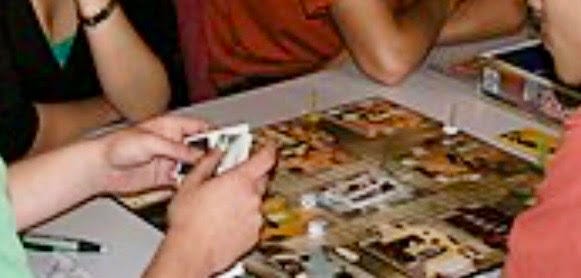
Cluedo (/ˈkluːdoʊ/ (known as Clue in North America -

"a murder mystery game for three to six players (depending on editions) that was devised in 1943 by British board game designer Anthony E. Pratt. The game was first manufactured by Waddingtons in the United Kingdom in 1949. Since then, it has been relaunched and updated several times, and it is currently owned and published by the American game and toy company Hasbro

- Wikipedia
A nursery rhyme/Clue mashup? Brilliant!